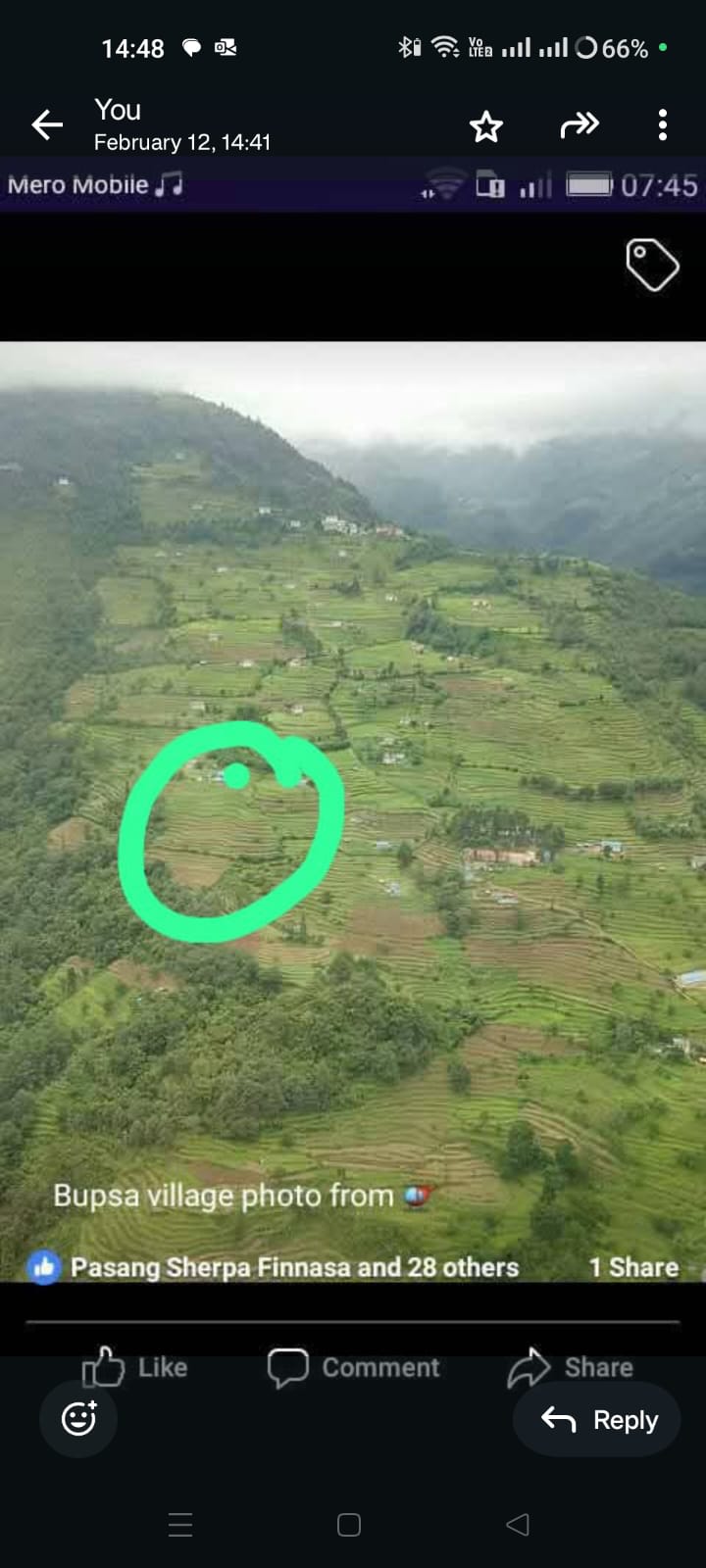
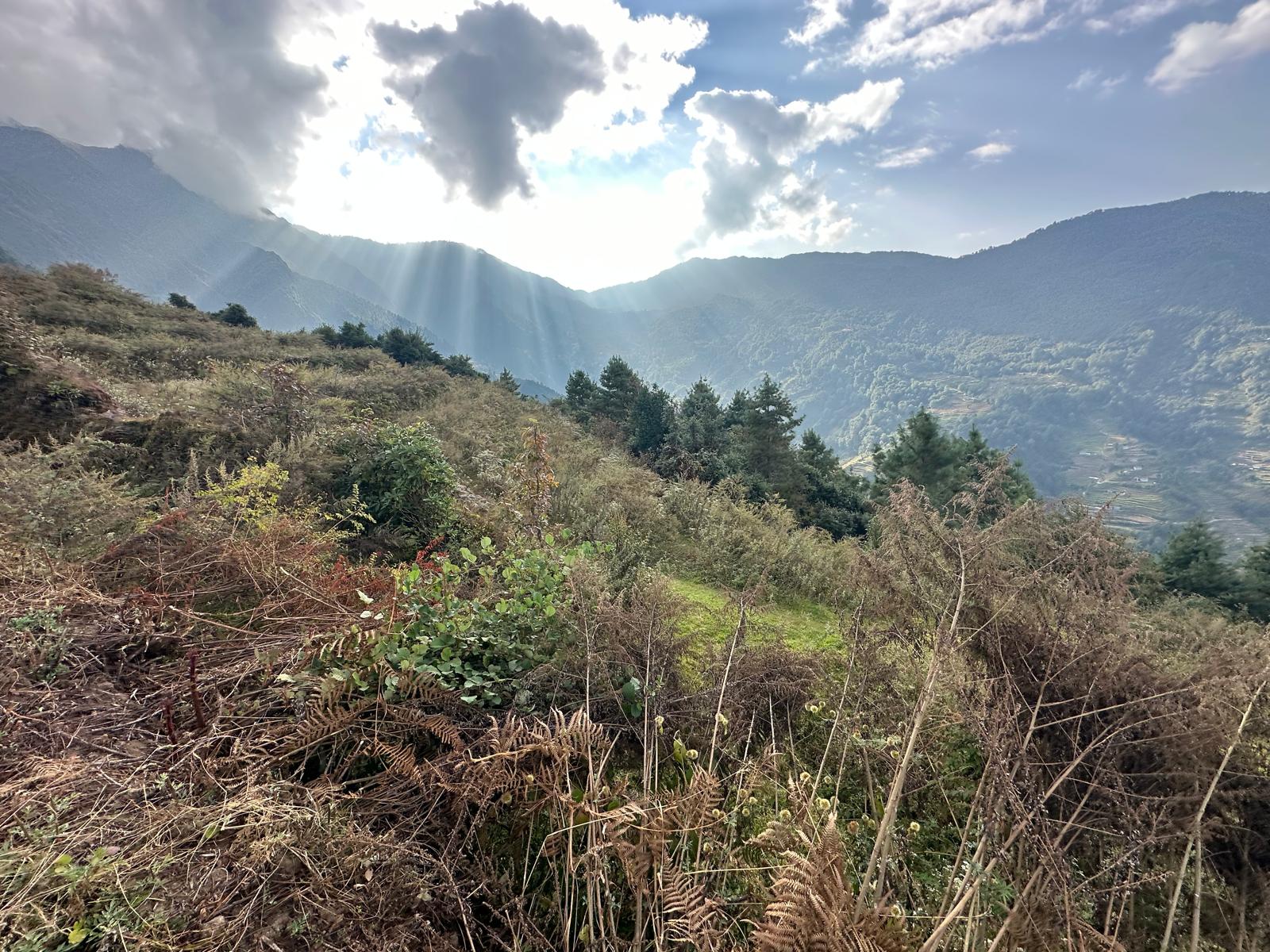
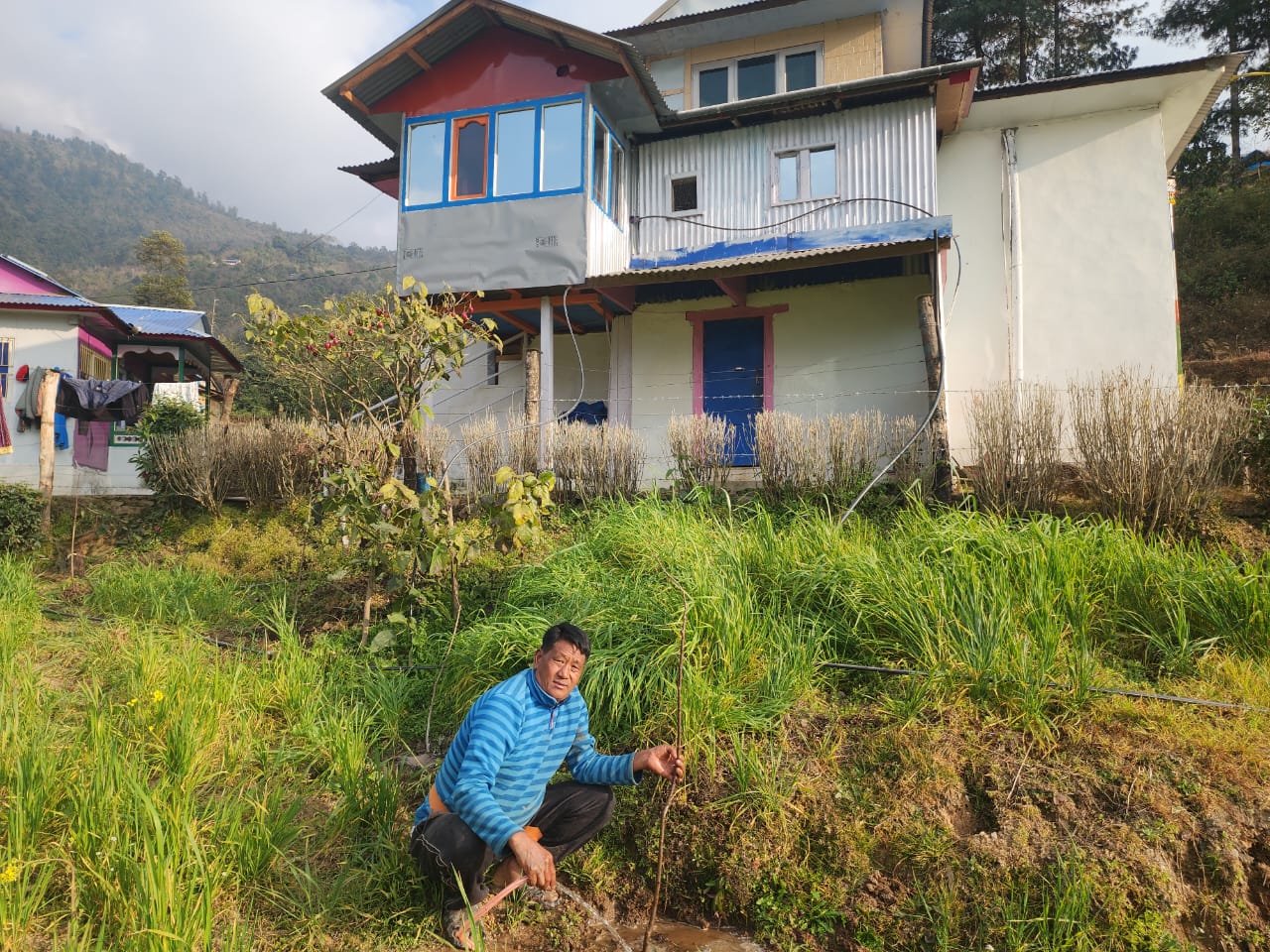
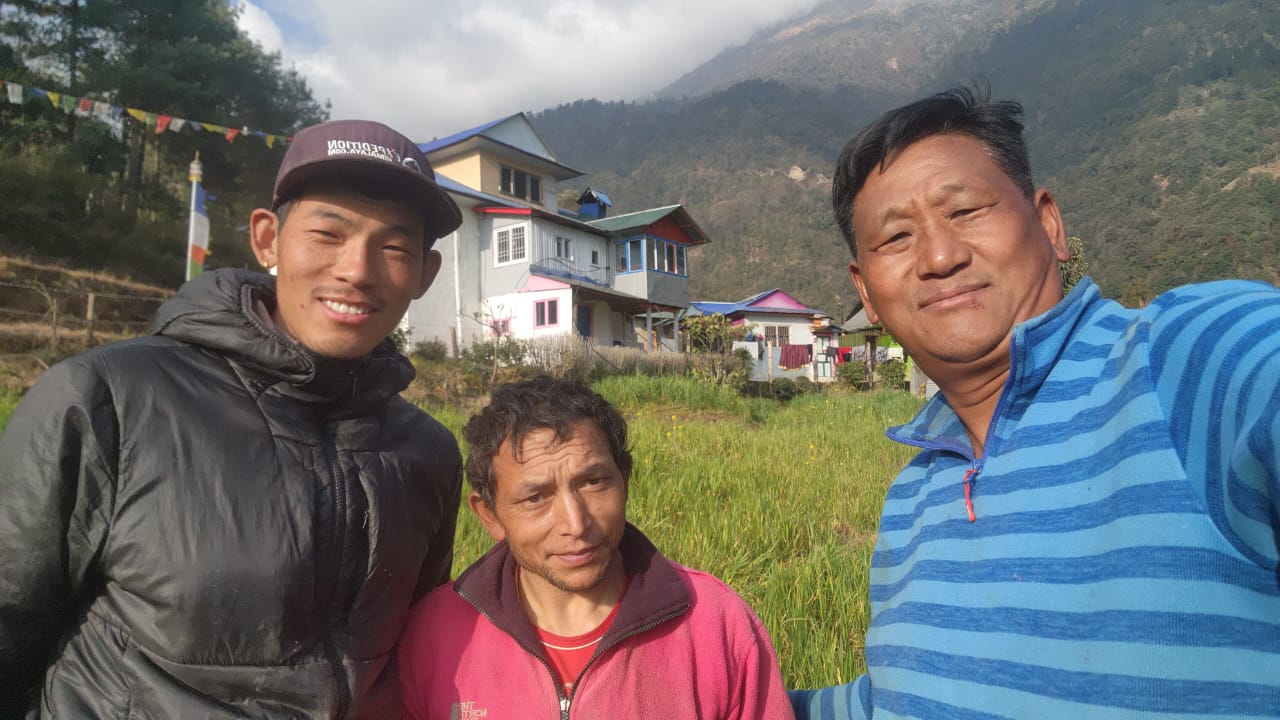
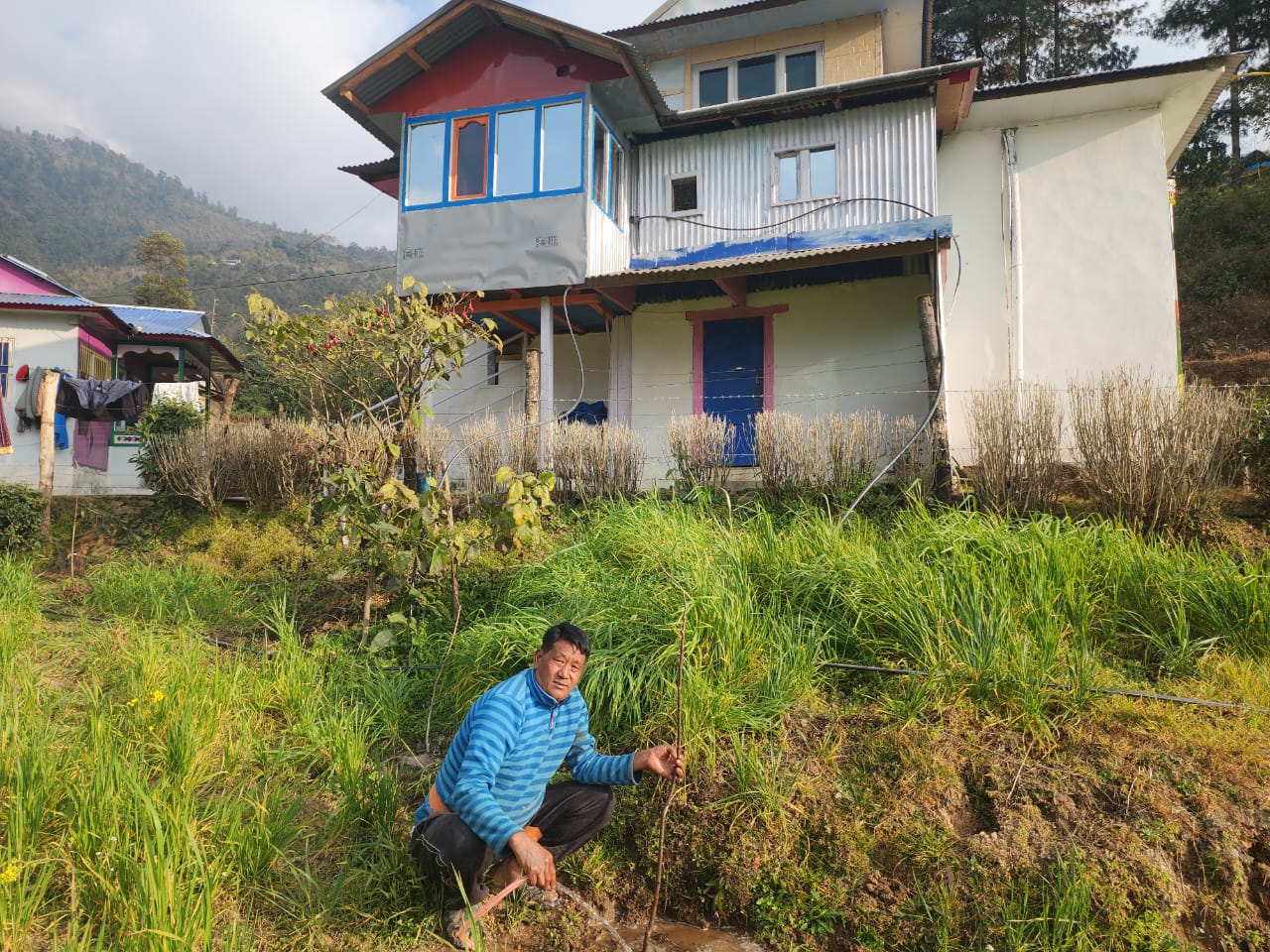
Bupsa is a small Sherpa settlement in Nepal’s Everest region, located on the main trekking route just below Lukla and above Karikola. Set on a ridge with wide views across deep valleys and terraced hillsides, the village has long relied on subsistence farming alongside trekking-related income. In recent decades, traditional agriculture has become increasingly difficult due to out-migration, labour shortages and low yields, leaving many terraced fields abandoned and fallow.
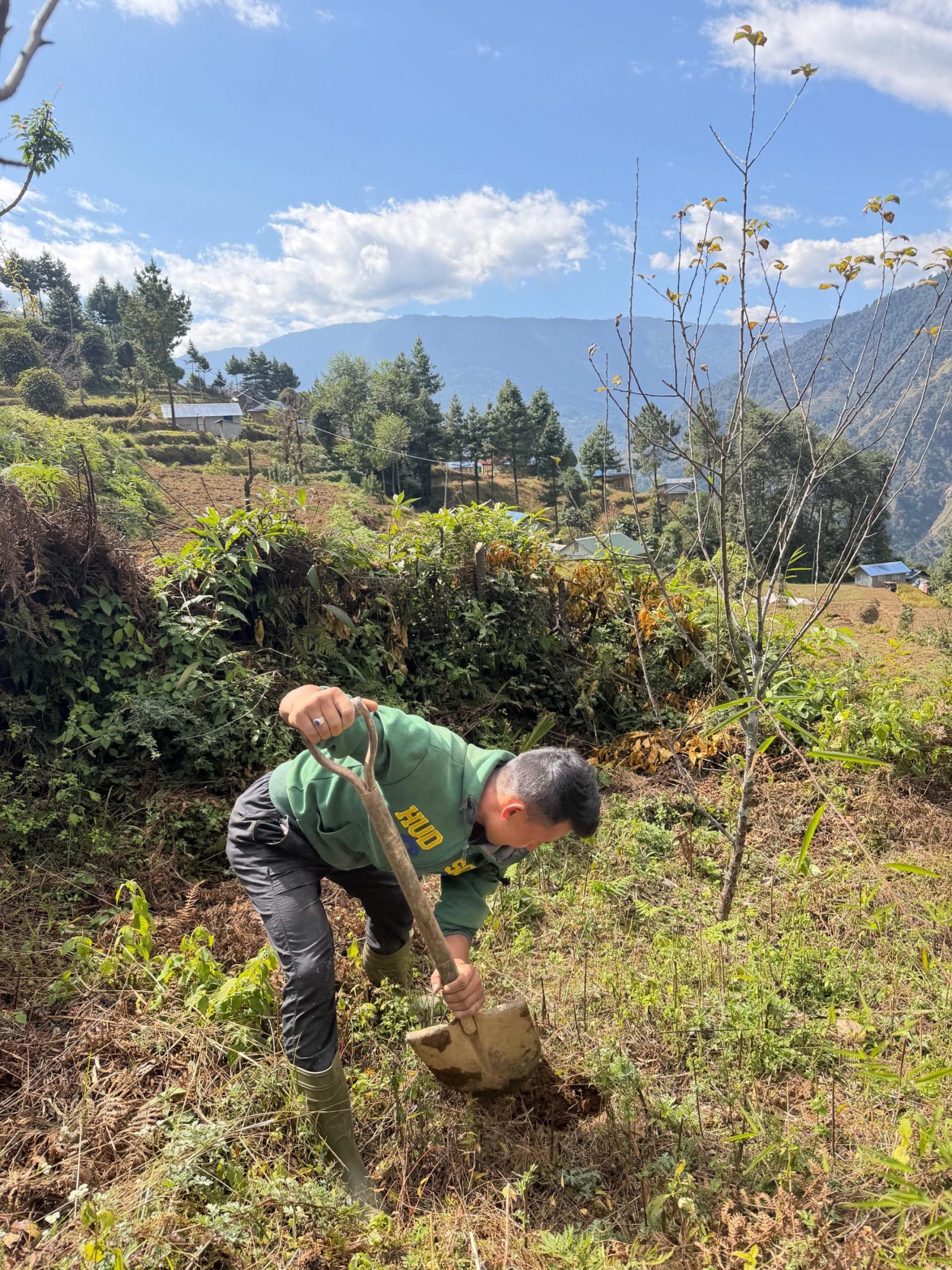
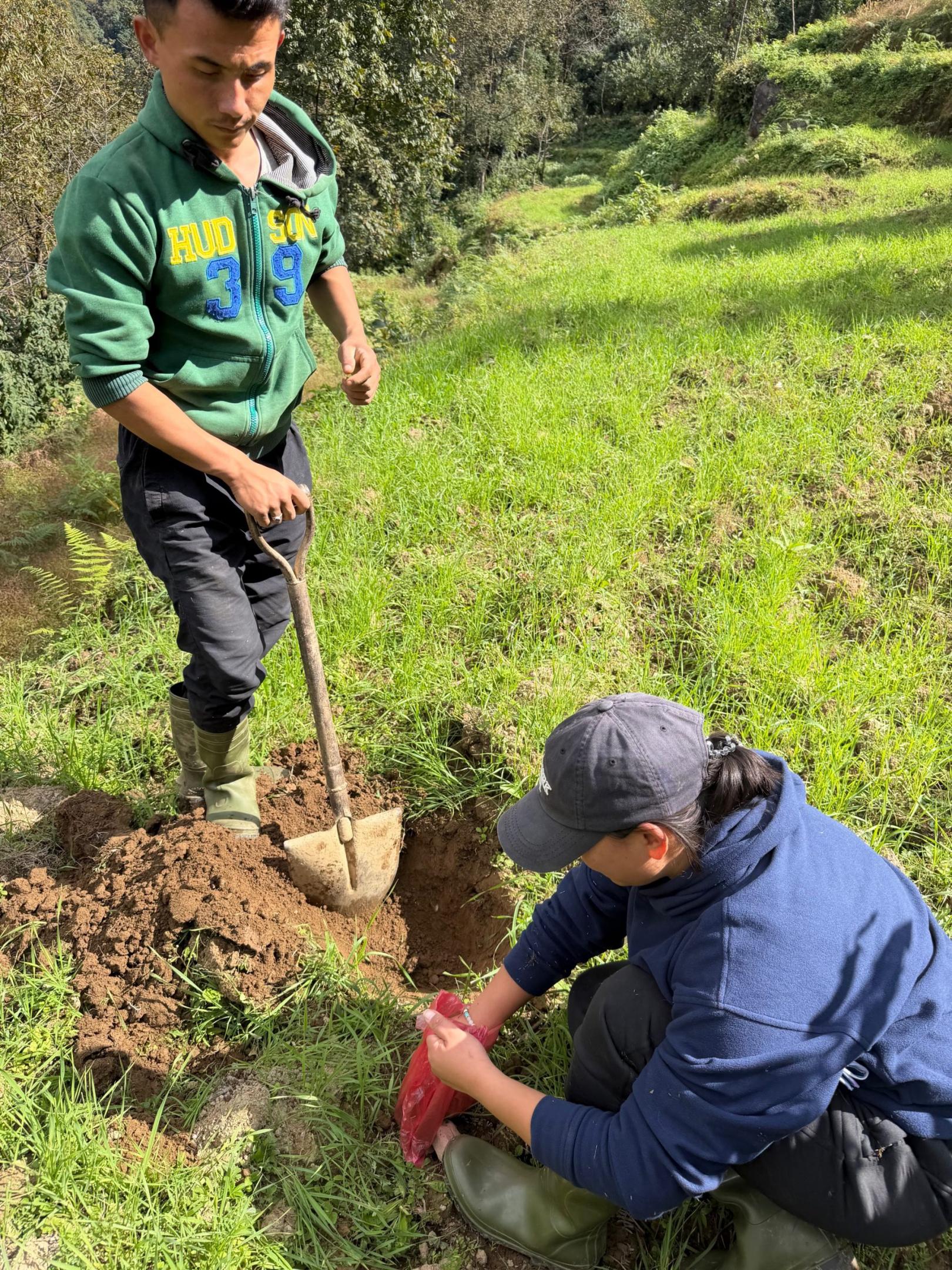
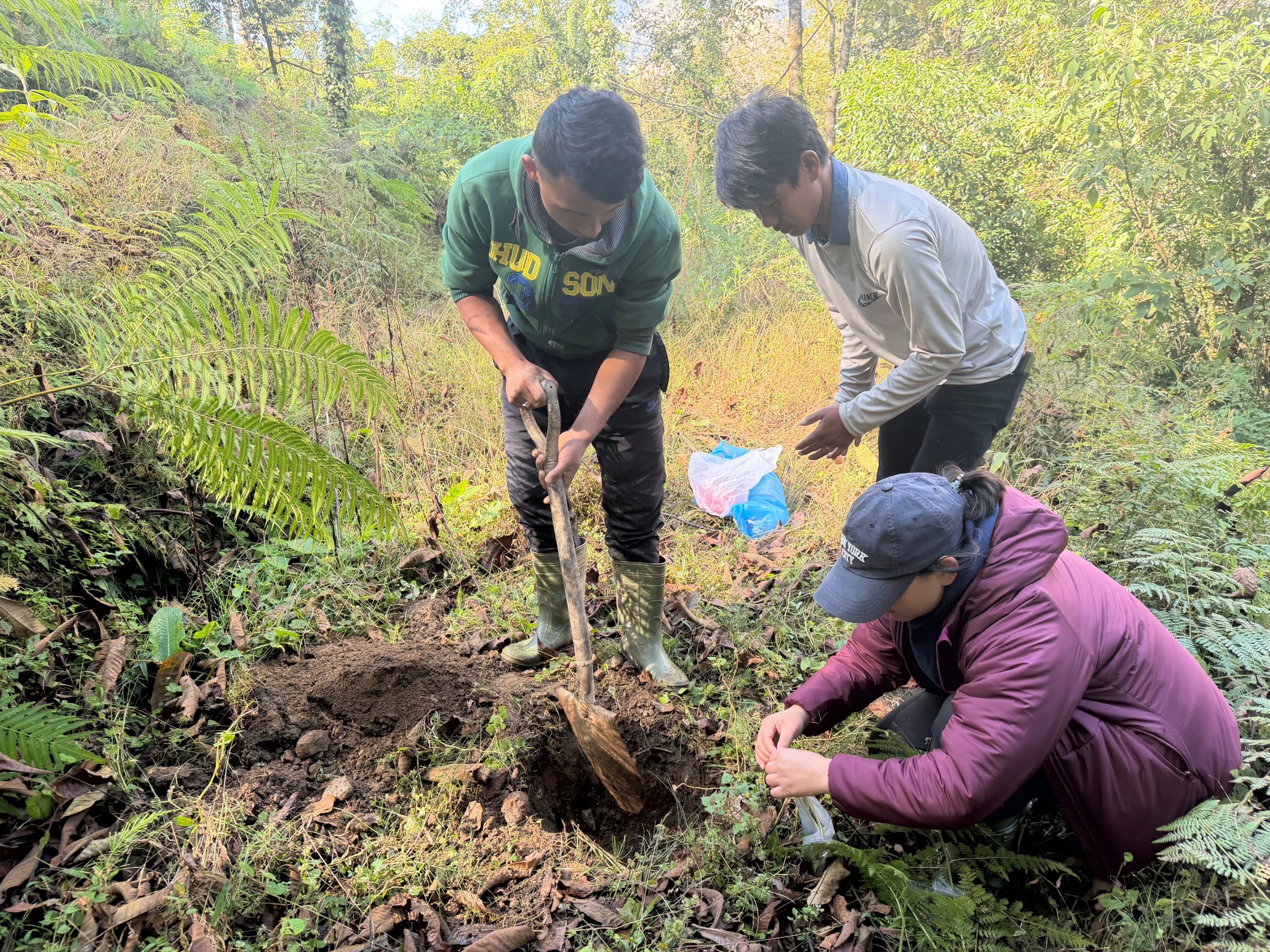
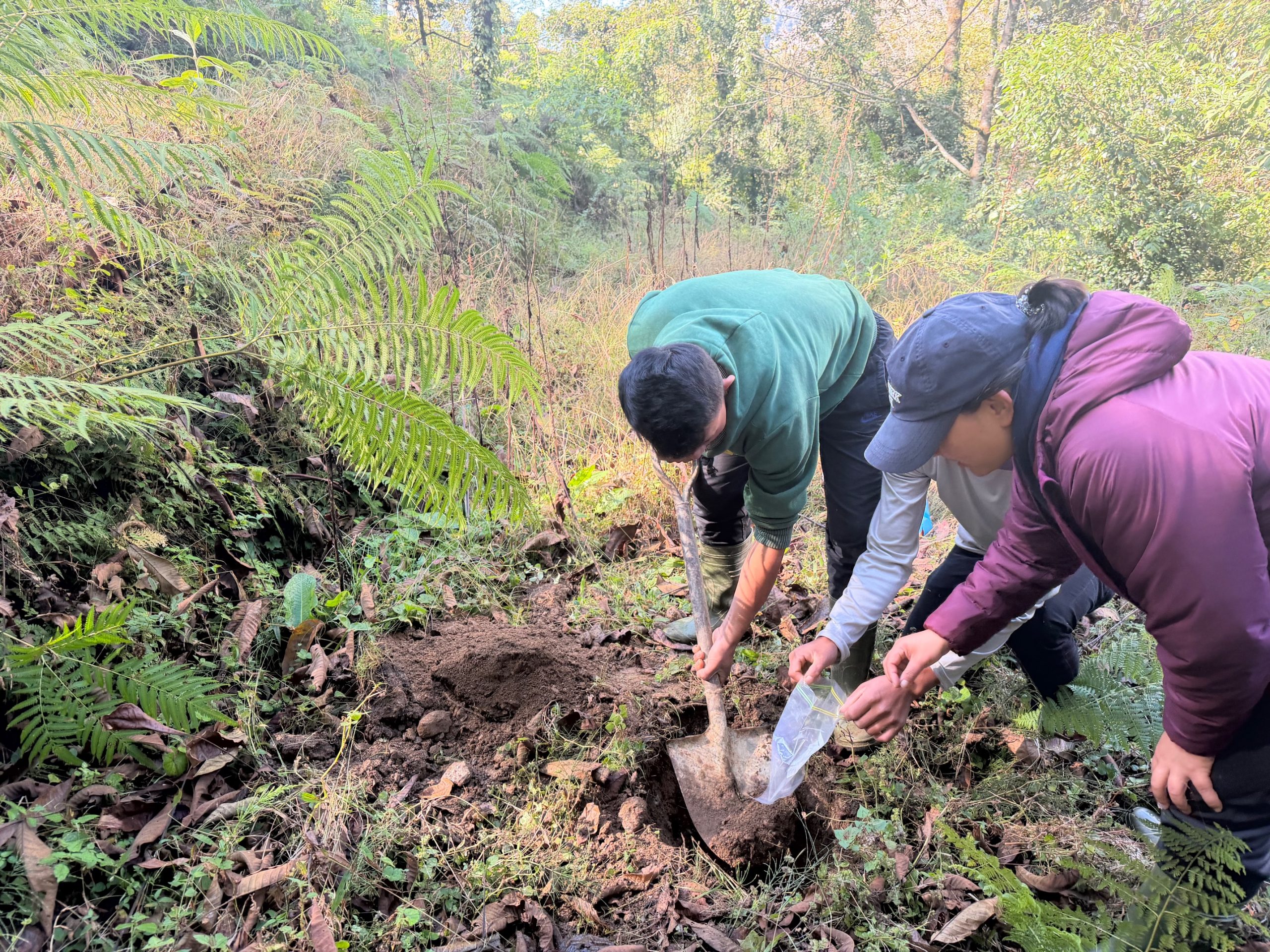
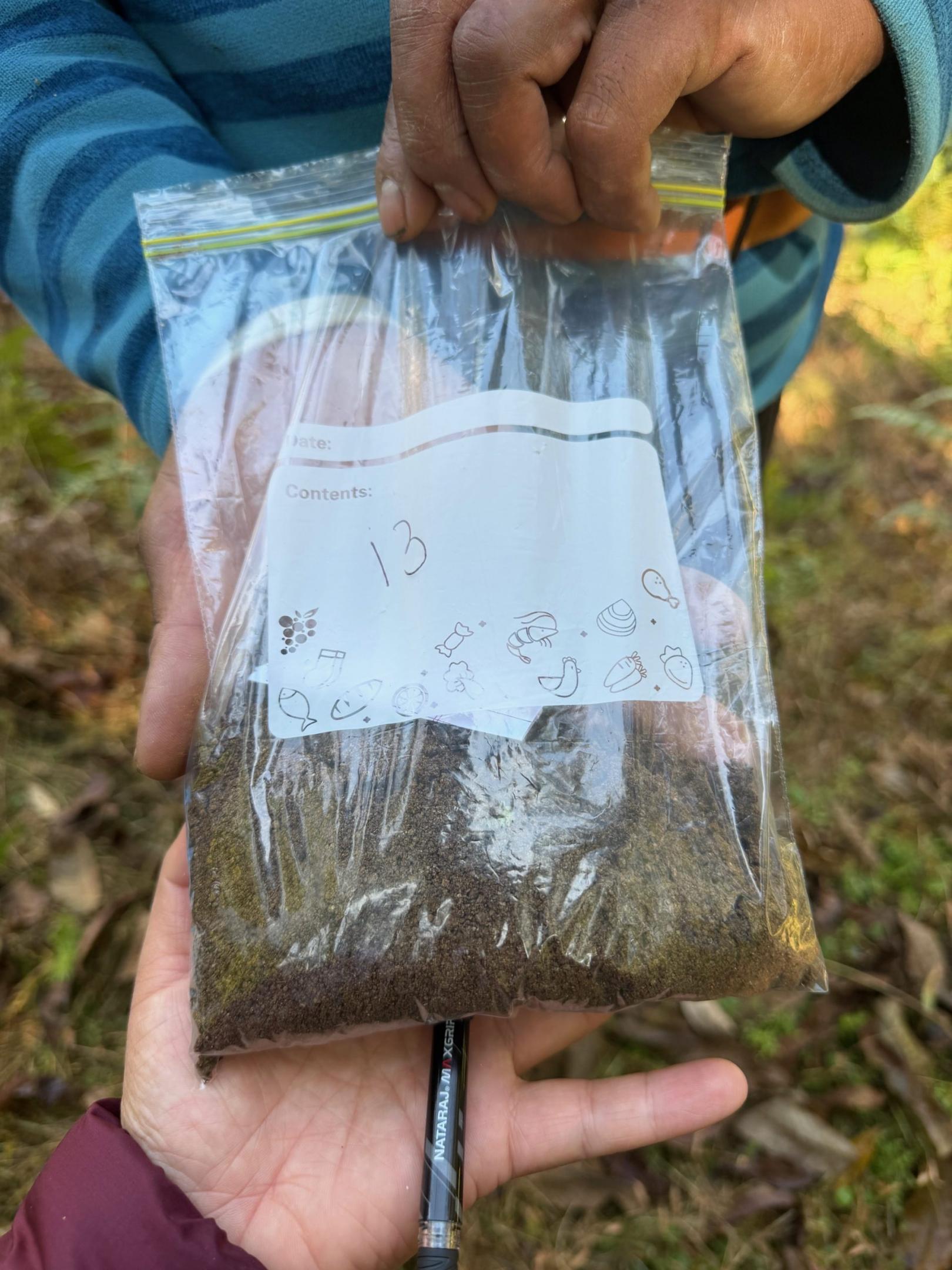
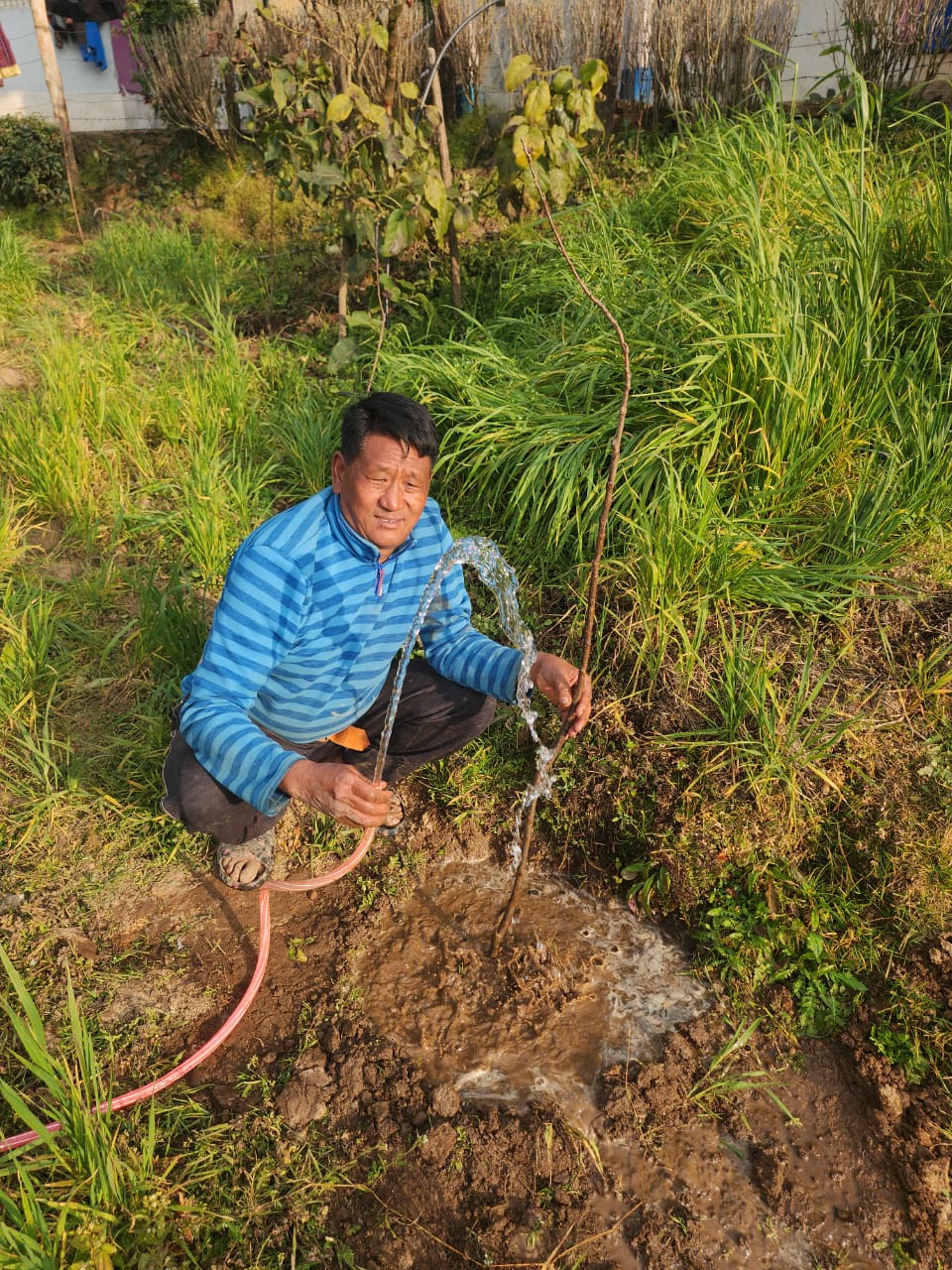
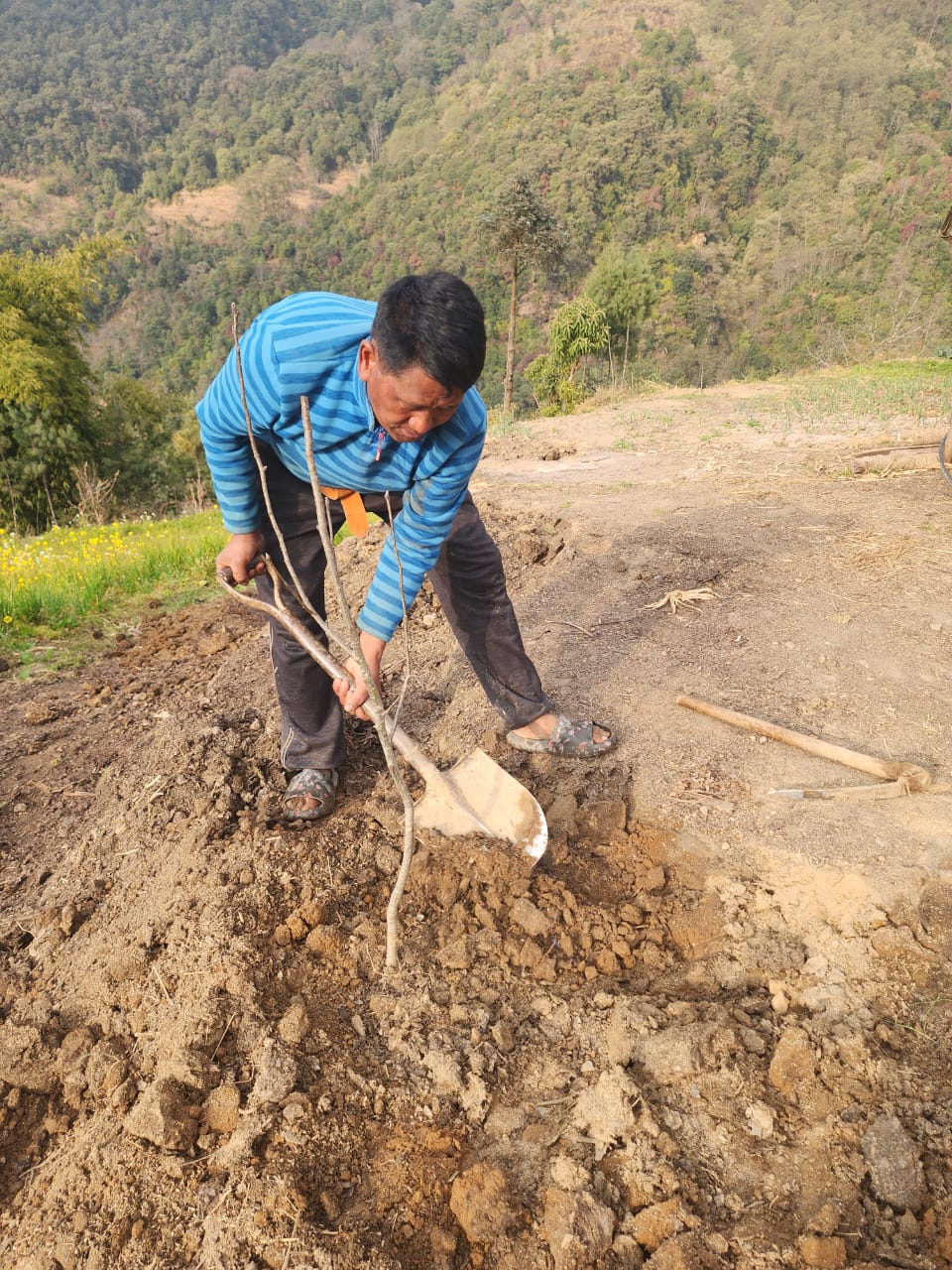
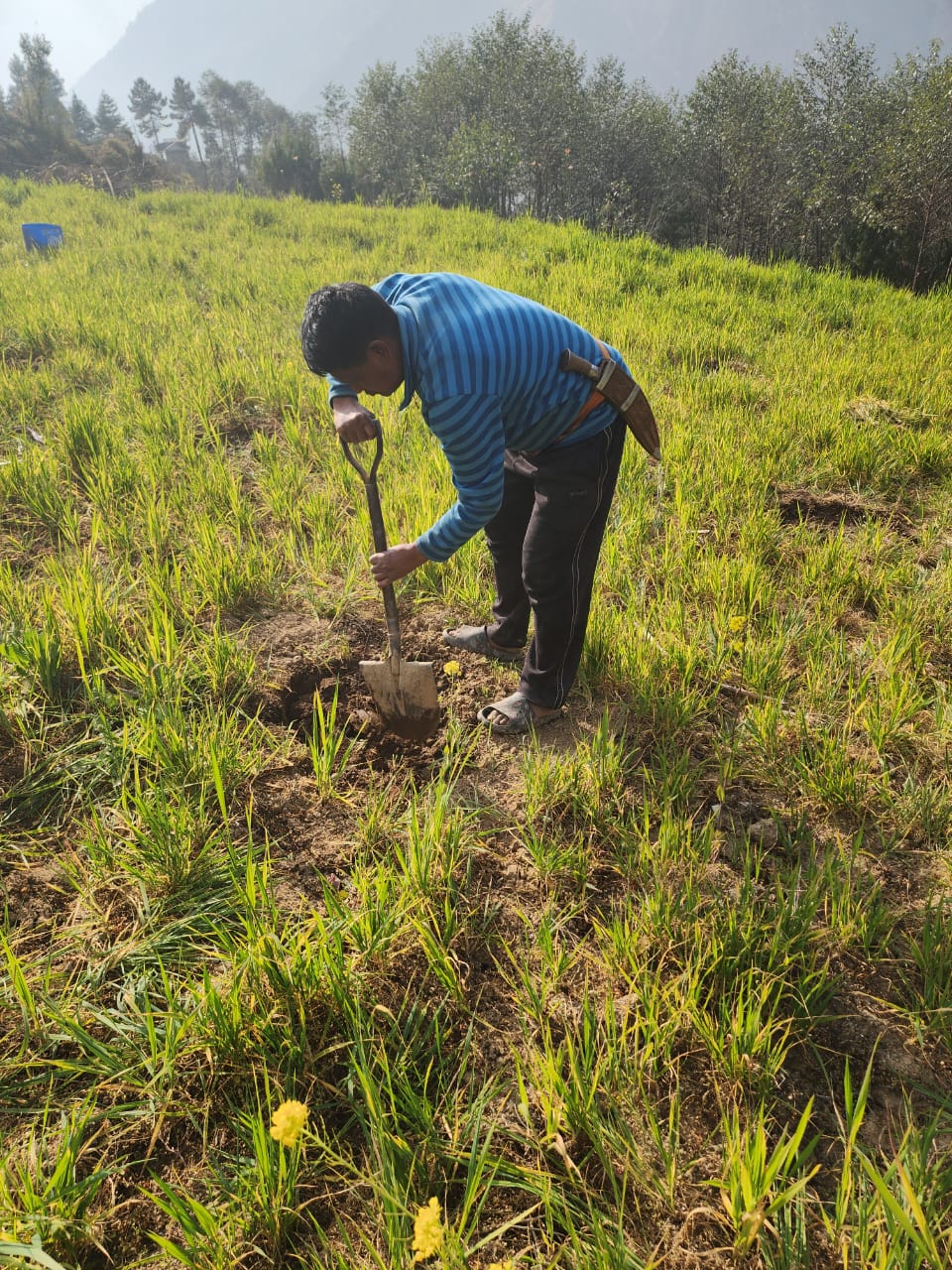
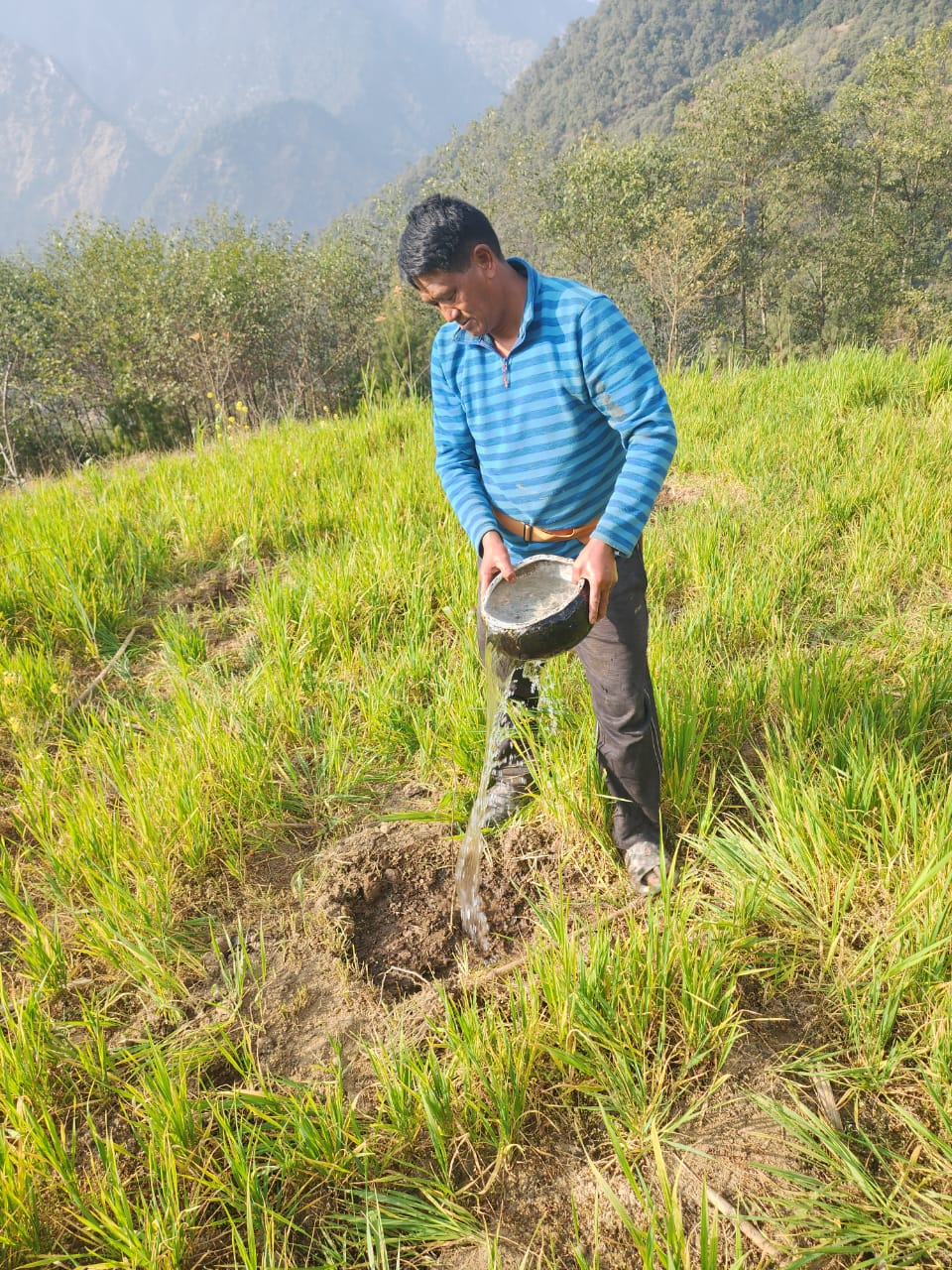
In November 2025, Nepal Evergreen volunteers visited Bupsa to carry out soil sampling and work with local farmers to plan a tree-planting programme. Since then, the project has moved from planning into action, with all 10,300 trees now planted across the surrounding terraces.
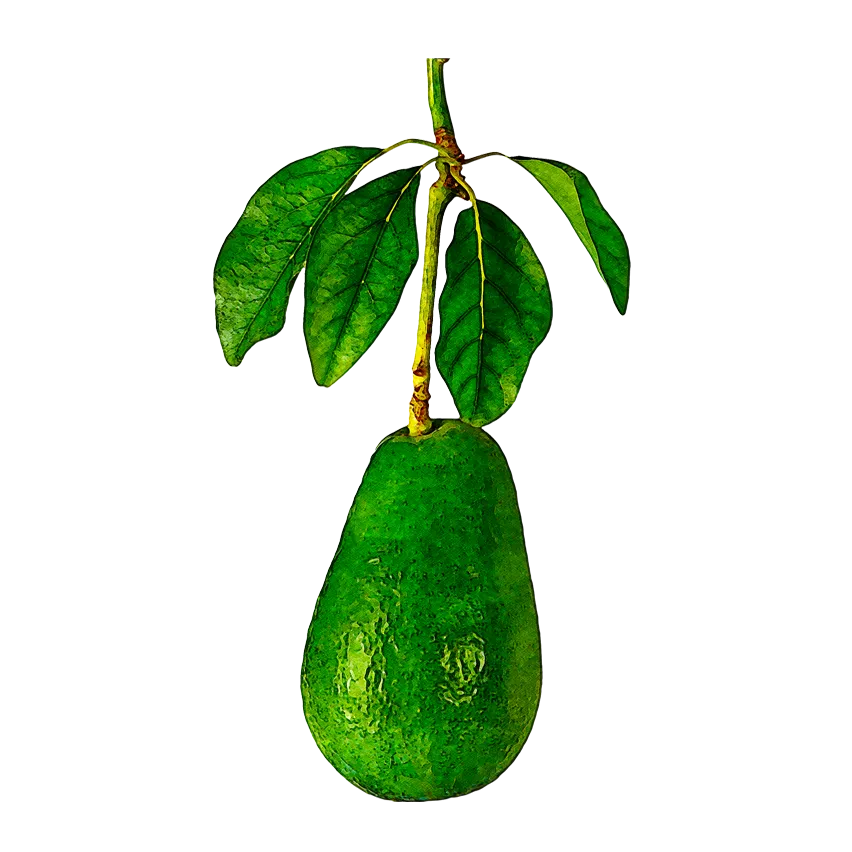
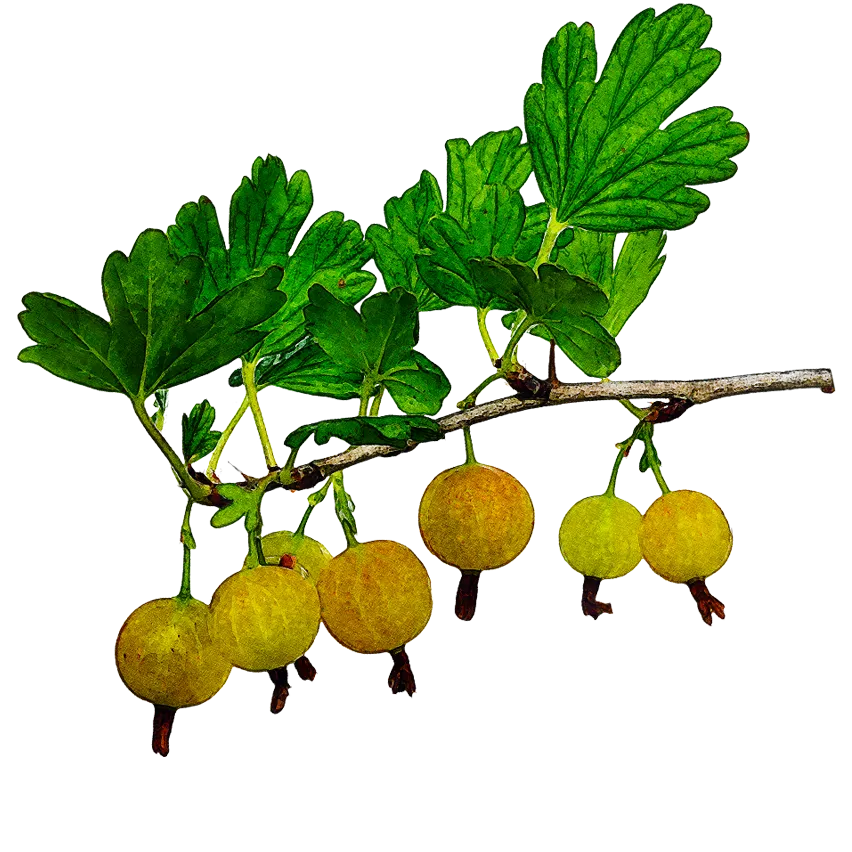
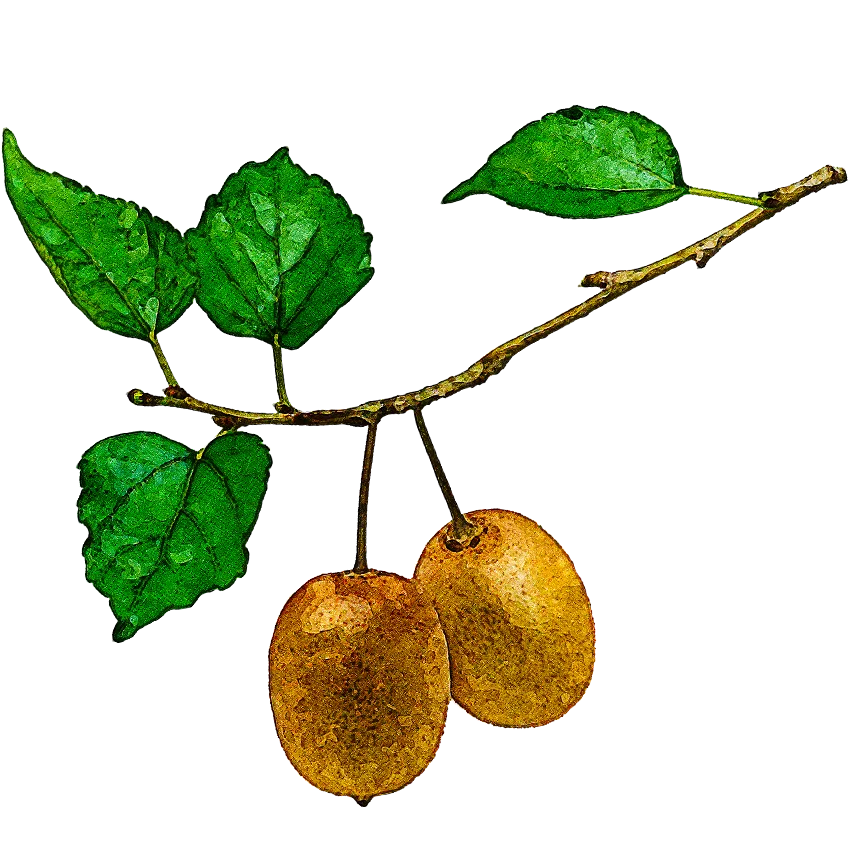
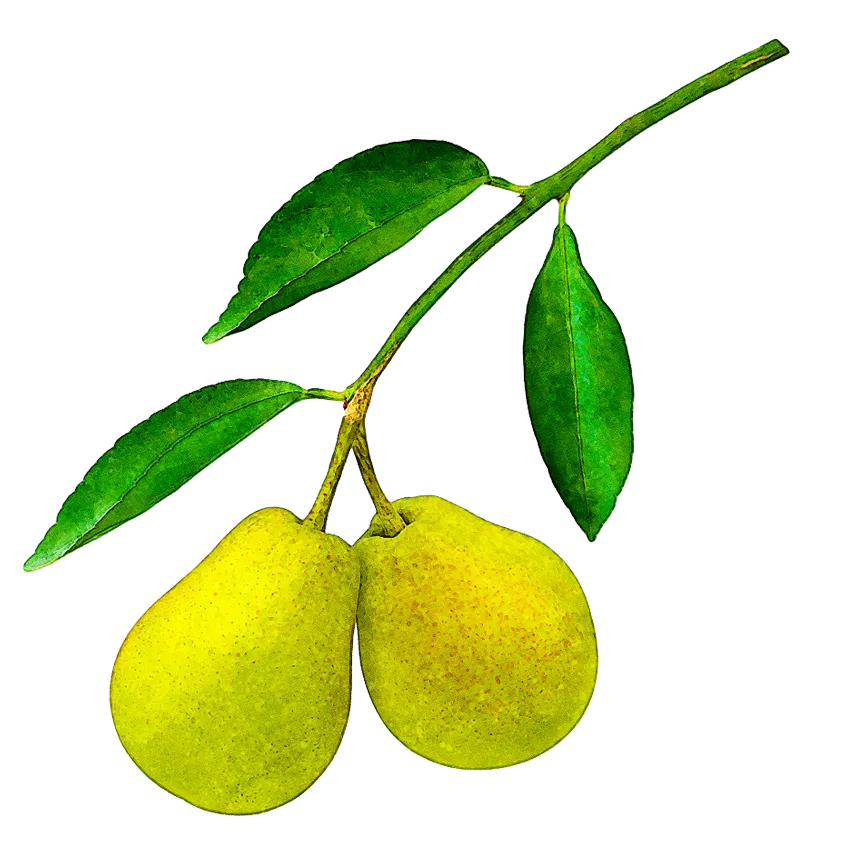
This includes 2,100 fruit trees—such as apple, peach, cherry, apricot, plum and golden kiwi—providing long-term food security and income for local families. Alongside these, 8,200 native and soil-enriching trees have been planted, including native Himalayan species and bamboo, helping to stabilise terraces, improve soil health and support biodiversity.
By restoring productive use to previously abandoned land, the Bupsa project aims to strengthen local livelihoods, improve soil condition and rebuild a resilient landscape that supports both people and the environment for the long term.
With all 820 fruit trees now planted, Nepal Evergreen is assessing further opportunities for additional planting during the upcoming monsoon season, when survival rates are highest.